- Visit us
- Call us:020 4549 8000
- Enquire online
What is the difference between later living, assisted living and care?
The choices for later life have never been broader, yet the language surrounding them remains confusing. Understanding the differences can transform how you think about what comes next.


- Article
- Quote
- Related Considerations
- Auriens perspective
- More Reading and Listening
A new landscape of later living
For much of the twentieth century, the choices surrounding later life were relatively easy to understand, if not necessarily easy to make. You remained at home, perhaps moved in with family or, when circumstances required it, entered residential care. Moving was generally prompted by need rather than choice.
That landscape no longer reflects the way many people are ageing. We are living longer, remaining independent for longer and reaching later life with expectations shaped by decades of choice about where we live, how we travel and how we spend our time. Family structures have changed too; several generations sharing one home is less commonplace, creating demand for alternatives that barely existed a generation ago.
In response, a broad spectrum of later-living models has emerged, from retirement villages and independent-living communities to assisted living, integrated retirement communities and more hospitality-led residences. Yet the terminology has evolved without much consistency. Similar labels can describe very different propositions, while fundamentally different models are frequently grouped together under the broad heading of ‘later living’. For anyone beginning to consider their options, meaningful comparison can be surprisingly difficult.
Understanding the difference requires looking beyond the label and, increasingly, beyond what is immediately visible. An impressive apartment, restaurant or beautifully appointed communal space tells only part of the story. How is the place actually run? Which services are delivered in-house? How closely are hospitality, wellbeing and healthcare connected? If circumstances change, can support increase and recede again without requiring another move? The scale of the community, ratio of team to residents and choice of tenure can prove equally significant.
These details reveal fundamentally different approaches to later life, and are often more consequential than the amenities that first attract attention. Perhaps the greatest shift, however, is in the nature of the decision itself. Moving no longer has to begin with the question of what care someone needs, but with the far more expansive consideration of how they want to live.
When we started looking, I don’t think we understood how different the options really were. Retirement developments, serviced apartments and places offering care all seemed to belong to roughly the same category. What changed was thinking about how we actually wanted to live, rather than what type of later living we thought we needed. Once we looked at it that way, the differences became much clearer. My advice would be to see places for yourself. You learn far more from experiencing how somewhere feels and works than from the terminology.
Auriens Resident
Related Considerations
What are the different types of later living?
The terminology can make very different propositions sound remarkably similar. Independent or senior living generally describes private homes created specifically for older residents, often with shared amenities and a community around them. Assisted living adds regular support with aspects of daily life, while residential care is designed for people requiring...
How does Auriens differ from staying at home or moving to a luxury serviced residence?
For many people, the real comparison is not between Auriens and a care environment, but between remaining in a much-loved home or choosing another high-quality residence. Auriens combines the privacy of an individual home with hospitality, wellbeing and medical expertise that already exist around it. Apartments have also been designed...
What questions should I ask before choosing a later-living residence?
Begin with the life you want to lead rather than the longest list of facilities. Is the location somewhere you genuinely want to live? Who else lives there, and does the scale feel right? Can you rent as well as buy? Then look beneath the visible proposition. Who provides the...


Auriens perspective
Perceptions are still catching up
Later living is still relatively new in the UK in its current form. For many people, their reference point is what was available to parents or grandparents, when moving was usually prompted by need. What they don’t always realise is how much broader the choice has become, or that moving can now be a positive decision about how you want to live.
Look beyond the amenities
Beautiful apartments and facilities matter, but I would always want to understand what sits behind them. Who provides the services, and how well do the teams work together? At Auriens, hospitality, wellbeing, the kitchen and Draycott are closely connected. That integration may not be immediately visible, but it makes an enormous difference to how seamlessly everything works.
Moving will become a more natural choice
I expect far greater choice in location, service, price and tenure over the next decade. Attitudes will change too. Children and grandchildren are seeing parents make positive moves and continue to lead full lives. As those experiences pass between generations, many of the old associations with later living will fade – and people will begin considering their options earlier.


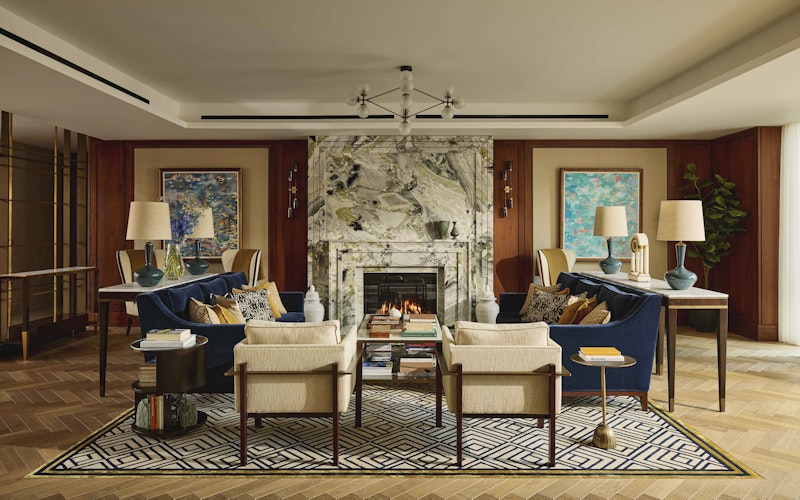
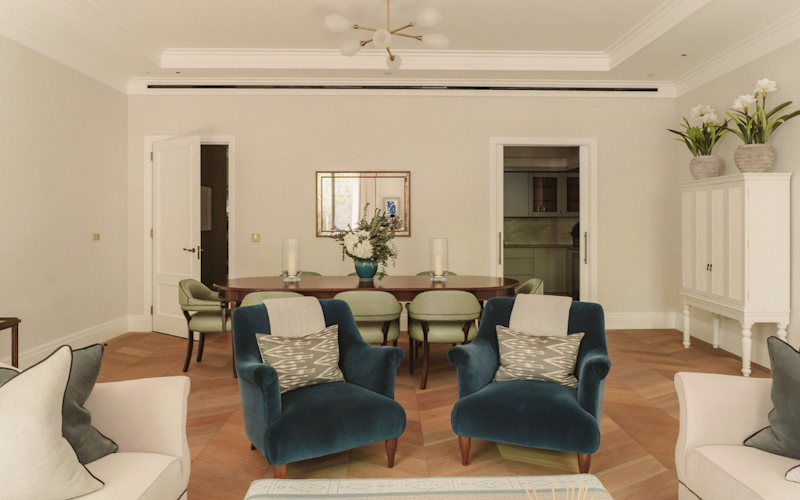

Perhaps the next step is simply to experience it
A conversation, coffee morning or visit can be a useful first step – an opportunity to experience Auriens without expectation and consider, in your own time, whether it might be right for you.
- Start a conversation
Company
Find Us
2 Dovehouse Street
London, SW3 6BF
020 4549 8000








Auriens is a member of ARCO, which represents Integrated Retirement Communities in Great Britain. As an ‘Approved Operator’, Auriens aims to comply at all times with the requirements of the ARCO Consumer Code.