- Visit us
- Call us:020 4549 8000
- Enquire online
How do I know when the time is right?
Perhaps nothing is particularly wrong. Life is still full, familiar and very much your own. Yet the question has begun to surface: could the years ahead be easier, richer, even better?


- Article
- Quote
- Related Considerations
- Auriens perspective
- More Reading and Listening
The right time rarely announces itself
We tend to imagine that life’s significant decisions will eventually become obvious. Something changes, the answer becomes clear and we know it is time to act. Yet when it comes to moving later in life, waiting for certainty can mean waiting until circumstances begin to make the decision for us.
The signs usually appear much earlier. A home that has been a source of pleasure for decades starts to require more attention. The garden becomes another responsibility. Travel takes more planning. Invitations are accepted less readily. Or, within a couple, one person gradually begins doing more: organising appointments, managing the house, anticipating what their partner might need. Without either quite noticing, the balance can shift from partnership towards caregiving.
Nothing is necessarily wrong. Each adjustment is manageable, which makes it easy to accommodate the next. This is often how significant change goes unnoticed: not because it is absent, but because we become remarkably good at adapting to it.
Then something more definite happens. A bereavement, a fall or a change in health can turn a question that might have been considered gradually into a decision that needs to be made quickly. The options may be the same, but the experience of choosing between them is very different.
There is every reason to hesitate. A long-held home contains memories, routines and decades of life. Moving before it becomes necessary can therefore feel counterintuitive. Why change something that is still working?
Perhaps because “still working” and “working brilliantly” are not quite the same thing.
Moving earlier creates the luxury of choosing slowly. There is time to decide where you genuinely want to live, make the move on your own terms and enjoy what a different way of living makes possible. For couples, it can also allow practical and caring responsibilities to be shared by others, leaving more space simply to be partners.
There is no universal age at which the time becomes right. But there is a considerable advantage in asking the question while the answer remains yours.
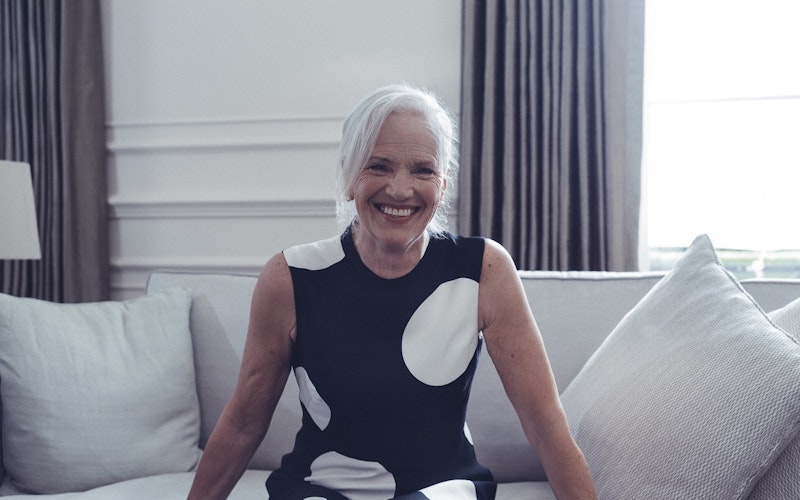
It happened so gradually that I don’t think either of us really noticed. I simply began taking on more – organising things, making arrangements and worrying about things we had once shared. Without realising it, I had become a caregiver as well as a partner. What changed when we moved was that I no longer had to carry everything myself. The support around us quietly took on some of that responsibility, giving us the space to enjoy being partners again, rather than letting practicalities define our life together.
Auriens Resident
Related Considerations
What are the advantages of moving before support is needed?
Moving while you are active and independent changes the nature of the decision. There is time to become familiar with a new home, establish your own routines and relationships, and enjoy everything around you without an immediate need shaping the experience. It also allows support to remain where many people would...
How can families start the conversation sensitively?
Families often notice small changes before the person experiencing them considers those changes significant. Yet a conversation motivated by concern can easily be heard as a challenge to independence, particularly when it begins with what might happen in the future. A more constructive conversation starts with what someone wants to protect:...
What becomes possible when you move earlier?
The consequences of moving are often considered in terms of what must be left behind. Residents’ experiences suggest an equally important question: what might be gained? When the responsibilities of maintaining a larger home recede, time and energy return to other parts of life. Travel can become easier to contemplate;...


Auriens perspective
Expectations change quickly
People often arrive with assumptions about what later living will feel like – that it might be institutional, restrictive or simply not offer the value they expect. Once they experience Auriens, they realise how independent life here is. Residents come and go, welcome friends and continue living entirely on their own terms, with exceptional service around them.
There is no typical resident
Our residents really aren’t cut from the same cloth. They have fascinating stories and very different backgrounds: entrepreneurs, self-starters, early adopters and people who have taken risks throughout their lives. Many are deeply connected to Chelsea and remain incredibly engaged with the world. I think that surprises people.
Bricks and mortar don’t create the emotion
The building may make an immediate impression, but bricks and mortar don’t create the emotion. For me, the true luxury is the genuine bond between our residents and the team. They take an interest in each other’s lives and genuinely care. I want people to leave feeling listened to, understood and, above all, at home.


Company
Find Us
2 Dovehouse Street
London, SW3 6BF
020 4549 8000








Auriens is a member of ARCO, which represents Integrated Retirement Communities in Great Britain. As an ‘Approved Operator’, Auriens aims to comply at all times with the requirements of the ARCO Consumer Code.