What is a Nursing Home? Retirement Living Alternatives

In this guide we explore what nursing homes offer, who they’re suitable for, and how they differ from what we offer at Auriens, where our focus is on independent, lifestyle-led later living with tailored support only when needed.
Here’s what we’ll cover:
- What a nursing home is
- Who they’re designed for
- How they differ from other types of care
- Key advantages and disadvantages
- How to choose a nursing home
- What makes Auriens a distinct alternative
What is a Nursing Home?
A nursing home is a regulated care facility for older adults and individuals with complex or ongoing health needs. As well as support with everyday activities like washing, dressing, and meals, residents have access to round-the-clock clinical care delivered by registered nurses.
This makes nursing homes distinct from residential care homes, which provide personal support but not medical care. Nursing homes are also different from assisted living or sheltered housing, where residents typically live more independently and receive only light-touch help with daily tasks.
Who Are Nursing Homes For?
Nursing homes are best suited to individuals who:
- Have chronic or degenerative conditions (Parkinson’s, MS, or advanced arthritis for example)
- Require daily medical supervision or complex medication routines
- Are recovering from surgery, injury, or hospital stays
- Live with advanced dementia or cognitive impairments
- Are experiencing severe mobility limitations
Sometimes the need for nursing care emerges gradually. In other cases, it follows a sudden health change or hospital admission. Common signs it might be time to consider a nursing home include increased falls, unmanaged symptoms, reduced mobility, or carer burnout in the family.
How Do Nursing Homes Differ from Care Homes?
The key distinction between nursing homes and residential care homes is the presence of medical staff. Nursing homes are staffed by registered nurses and support a wider range of complex health needs, while residential care homes focus on personal care, such as help with dressing or hygiene.
| Feature | Residential care homes | Nursing homes |
|---|---|---|
| Medical care | Not routinely provided | Provided 24/7 by registered nurses |
| Staff | Trained carers | Carers and qualified nursing staff |
| Suitable for | Support with daily tasks | Complex or chronic health needs |
| Costs | Typically lower | Often higher due to medical staffing |
| Typical residents | Early-stage dementia, mobility-limited | Advanced dementia, post-op, chronic illness |
For more info, read our guide to residential care homes.
How Do Nursing Homes Work?
Life in a nursing home is designed to balance medical support with comfort and structure. Here’s what a typical day might include:
- 24/7 clinical supervision: nurses monitor health conditions, administer medication, and provide wound care or treatment for chronic conditions
- Help with activities of daily living: trained carers assist with dressing, washing, toileting, eating, and mobility
- Rehabilitation and therapies: many nursing homes offer access to physiotherapists, occupational therapists, or speech and language support
- Meals and housekeeping: residents receive three daily meals, and all cleaning and laundry is handled on-site
- Social and recreational activities: group events, games, and gentle exercise programmes are common, helping to maintain wellbeing and social connection
Some nursing homes specialise in dementia care, palliative care, or recovery post-surgery, and will have environments and staff training tailored accordingly.
Advantages of Nursing Homes
While every nursing home is different, many offer a combination of clinical care, routine, and reassurance that can be hard to replicate in other settings. Below are some common benefits associated with this type of accommodation:
- Higher level of medical care: with nurses on hand 24/7, residents receive appropriate clinical support for ongoing conditions, medication routines, or post-operative recovery.
- Comprehensive support: nursing homes offer a holistic care environment that combines physical support, medical treatment, and emotional care in one place.
- Specialised services and therapies: access to on-site or visiting therapists ensures residents with specific rehabilitation needs can continue improving their quality of life.
- Safety and supervision: falls, infections, and other complications can be identified and addressed quickly thanks to constant monitoring.
- Peace of mind for families: families can feel confident that their loved one is receiving attentive, appropriate care from trained professionals.
Potential Drawbacks of Nursing Homes
While nursing homes can be the right choice for many, they do come with some trade-offs. These points can help families and individuals consider whether this model of care aligns with their values, health needs, and lifestyle preferences:
- Loss of independence: daily schedules are often fixed, and residents may need permission or assistance for simple tasks they once managed alone.
- Less homelike environment: compared to independent living or retirement apartments, nursing homes may feel more clinical or institutional in layout.
- Social experience may differ: despite communal activities, some residents may feel isolated due to cognitive impairments or less opportunity for spontaneous connection.
- Emotional adjustment: moving into a nursing home can be emotionally challenging, particularly for individuals transitioning from long-term family homes.
- Distance from family: the right facility might not always be nearby, making visits more difficult for loved ones.
- Variable quality: the standard of nursing homes can vary significantly. Location, funding, and staffing ratios all impact resident experience, so research is essential.
How to Choose a Nursing Home
Finding the right nursing home involves more than just location and cost. The goal is to ensure the environment, care philosophy, and services align with the needs of you or your loved one.
Here are six considerations to keep in mind when deciding on a nursing home.
1. Research and Recommendations
Start with online directories like CareHome.co.uk, and look at CQC ratings, testimonials, and recommendations from healthcare professionals.
2. Visit in Person
Assess room layouts, cleanliness, garden access, and staff interactions. Talk to residents if possible. First impressions count.
3. Staffing Levels
Ask about staff-to-resident ratios, nurse qualifications, and staff turnover. Continuity of care is vital.
4. Services and Specialisms
Make sure the home can meet specific needs, whether that’s dementia support, palliative care, or post-operative rehabilitation.
5. Cost and payment options
Nursing homes can be expensive. Explore funding options including local authority support, NHS Continuing Healthcare, or personal savings.
6. Ask Key Questions
Don’t be afraid to ask questions to find out more. Things like:
- What does a typical day look like?
- What happens if care needs change?
- How are care plans developed?
- What are the visiting policies?
- How do you handle medical emergencies?
How it Works at Auriens
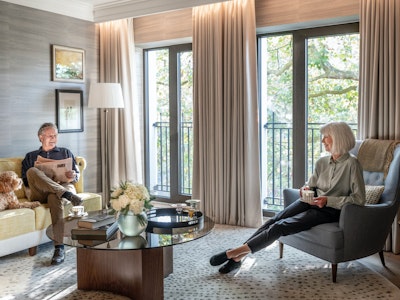
Auriens is not a nursing home. We offer something different: a reimagined model of retirement living rooted in autonomy, wellbeing, and refined living.
Our Chelsea residence offers private apartments, exceptional amenities, and a lifestyle that prioritises comfort, culture, and independence. Residents live on their own terms, with tailored support available if and when needed through our trusted clinical partner, Draycott Nursing & Care.
This means our residents can continue living independently, with access to expert medical care when required, without compromising the privacy, dignity, or standards they’re accustomed to.
Discover how Auriens works, explore our exclusive amenities, or find out more about care and support at Auriens Chelsea.



Find Us
2 Dovehouse Street
London, SW3 6BF
020 4549 8000







Auriens is a member of ARCO, which represents Integrated Retirement Communities in Great Britain. As an ‘Approved Operator’, Auriens aims to comply at all times with the requirements of the ARCO Consumer Code.